If you run a business in Woodstock, Oxford County, or anywhere across Ontario, you have probably heard two very different pieces of advice about getting more customers online. One says you need to rank on Google. The other says you should just run ads. Both are right – and they are not the same investment. They do not cost the same, they do not pay you back the same way, and they do not reward the same kind of patience.
This is a straight comparison of local SEO and Google Ads for small and medium-sized businesses. We will look at what you actually pay for, how fast each one works, the quality of leads each brings in, and what you keep once you stop spending. By the end, you should be able to make the call for your own business – or recognize when the smarter move is a lean version of both.
How each channel actually works
Local SEO: earning your place in the results
Local SEO is the work of showing up – and getting chosen – when someone nearby searches for what you sell. That means searches like “web designer Woodstock,” “bookkeeper near me,” or “emergency plumber Oxford County.”
It covers your Google Business Profile, your website structure and service pages, your reviews, your local citations, and the content that answers the questions customers ask before they call. You are not paying per visit. You are building assets that keep pulling traffic in when the work is done.
Google Ads: renting the top spot
Google Ads places your business at the top of search results for the keywords you choose. You bid against other advertisers, and you pay each time someone clicks. You control the budget, the geography, and the message, and you can turn it on today.
The trade-off is simple: the traffic is rented. Stop paying, and the leads stop.
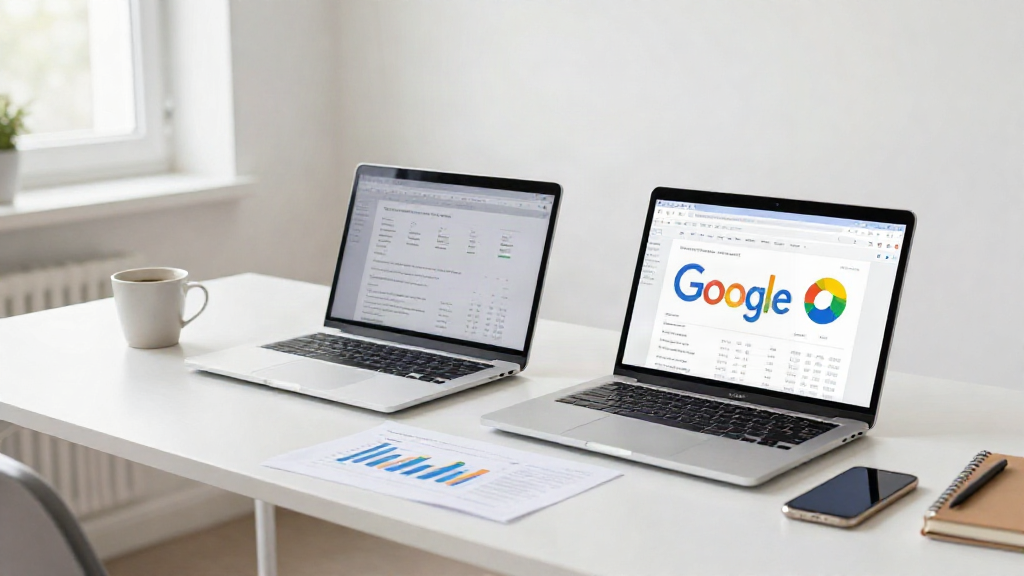
Local SEO vs. Google Ads: head to head
| Factor | Local SEO | Google Ads |
|---|---|---|
| What you pay for | One-time and ongoing optimization work | Every click, continuously |
| Time to traction | Weeks to several months to compound | Days, once campaigns are live |
| Lead quality | High intent, plus buyers still researching | High intent, skewed to “ready now” |
| Ongoing effort | Content, reviews, profile upkeep | Bid, budget, and creative management |
| What you keep when you stop | Rankings, pages, reviews – they remain | Nothing; visibility ends with spend |
| Cost trend over time | Usually falls as rankings mature | Tracks competition and auction pressure |
The cost picture over time
Google Ads is predictable in the short term and open-ended in the long term. You set a budget and you know roughly what a lead costs this month. But that spend never becomes an asset. Every month you start again, and if a competitor bids harder, your cost per lead drifts up.
Local SEO is the opposite shape. The first few months feel slow because you are laying foundations – a fast, well-structured site, service pages that match how people search, a properly built Google Business Profile, and a steady flow of reviews. After that, the cost per lead typically drops, because the same pages keep producing calls and form fills without a per-click fee.
The honest summary: ads rent attention, SEO buys a position. If you need leads this month, renting makes sense. If you want your marketing cost to shrink as a share of revenue, you eventually need to own something.
Lead quality: what actually shows up
Both channels attract people with intent, but the intent differs.
Ads catch the person who is ready to act: they searched, they clicked, they want a quote. That speed is valuable for seasonal offers, new service launches, and any week you need the phone to ring.
Local SEO brings those same ready-to-buy searchers to your map listing and organic pages – plus the larger group who are still comparing, reading, and deciding. Those are the customers you win by being visible when the shorter list is formed. Reviews and a complete profile do a lot of the persuading for you.
There is also a technical advantage worth knowing: good organic landing pages make your ads cheaper and more effective, because Google rewards relevance and visitors convert better on a page that matches what they searched.
A simple decision framework
Work through these in order.
- Fix the foundation first. If your website is slow, dated, or hard to use on a phone, neither channel will perform. A conversion-focused site is the price of admission for both.
- Choose by timeline, not by preference. If you need leads inside 30 days, start or lean harder into Google Ads. If your budget is tight and your horizon is six months or more, start with local SEO and let it compound.
- Choose by what is broken. Losing local visibility to competitors in the map results? That is a local SEO problem. Getting traffic but not enough of it at the right moment? That is often an ads problem.
- Choose by what you want to own. If the idea of paying for every visitor indefinitely bothers you, invest in the channel that keeps working after you stop.
Why most Ontario SMBs end up running a lean version of both
In practice, the strongest setups we see are not “ads or SEO.” They are a lean version of both, sequenced deliberately.
Ads carry the short term – steady leads while you build. SEO carries the long term – rising visibility, lower cost per lead, and assets you keep. The two feed each other: reviews and profile strength from your SEO work lift ad quality, and the landing pages you build for campaigns often become the pages that rank.
The trick is sequencing rather than splitting evenly. Start with whichever channel matches your timeline, keep the other running at a modest level, and shift weight as results come in.
Getting the order right for your business
There is no single correct answer to local SEO vs. Google Ads – only the right order of operations for your business, your margins, and your growth timeline. Get that order wrong and you spend a year paying for traffic you could have earned, or you wait on rankings while a competitor takes the customers who were ready to buy today.
Tekinfoway works with businesses across Woodstock, Oxford County, and Ontario on exactly this decision. We build the conversion-focused website, set up and manage local SEO, run Google Ads, and connect it all to eCommerce, mobile apps, and IT support – so the channels work as one system instead of competing for your budget.
Let’s look at where you stand today and put the pieces in the right order. Start your project with us and we will map out the plan that gets you customers fastest without wasting a dollar.

No comment